AI for Chronic Disease Prediction: How Technology Can Reduce Diabetes and Heart Disease Complications
AI for Chronic Disease Prediction: How Technology Can Reduce Complications
The Growing Challenge of Chronic Diseases
Chronic diseases such as diabetes and cardiovascular conditions remain among the leading causes of death worldwide.
Despite advances in modern medicine, diabetes continues to be a lifelong condition that requires constant monitoring and management.
Many complications arise because warning signs are detected too late, when serious damage has already occurred.
Examples of complications include:
-
heart attacks
-
strokes
-
kidney failure
-
nerve damage
-
diabetic coma
Preventing these complications requires early detection and continuous monitoring of patient health data.
The Role of Artificial Intelligence in Healthcare
Artificial intelligence (AI) is increasingly being used to analyze large amounts of medical data and identify patterns that humans may not easily detect.
AI systems can process:
-
clinical records
-
genetic data
-
vital signs
-
lifestyle information
By analyzing this data, AI models can predict future health risks before symptoms appear.
This shift allows healthcare providers to move from reactive treatment to preventive healthcare.
Predicting Chronic Disease Complications
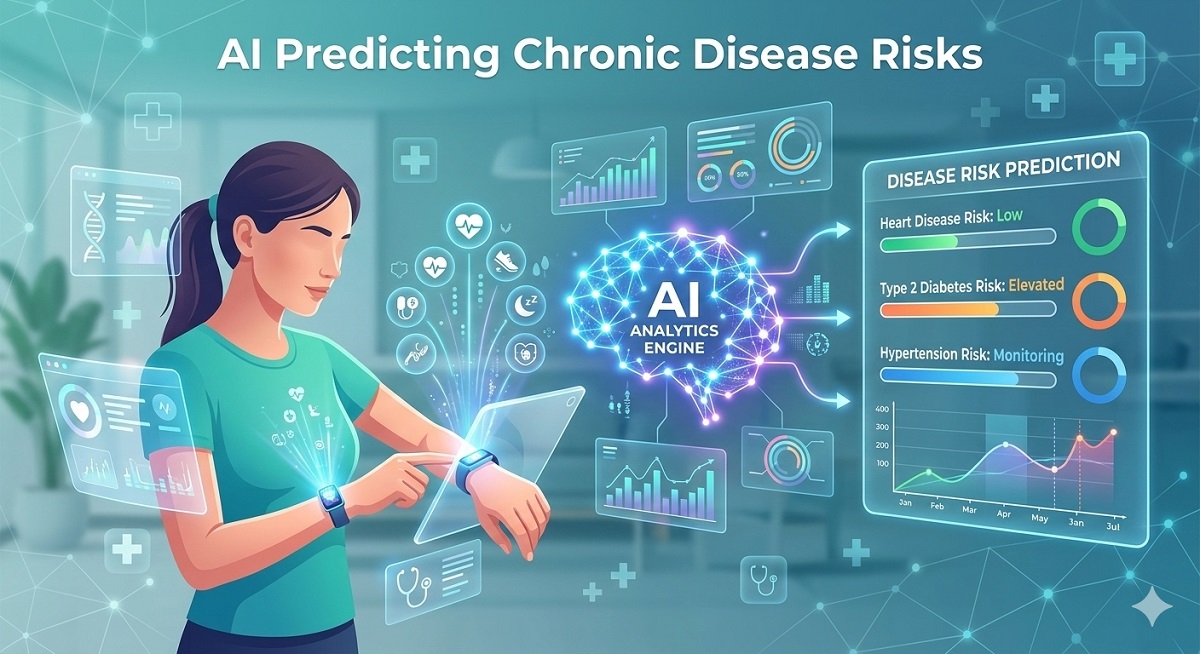
AI-powered healthcare platforms can monitor patient health data continuously.
These systems use algorithms to detect patterns that may indicate a growing health risk.
For example, AI can identify relationships between:
-
blood glucose levels
-
heart rate patterns
-
blood pressure changes
-
patient age and lifestyle factors
Using these indicators, AI systems can estimate the probability of serious complications such as cardiac arrest or diabetic emergencies.
Early warnings allow doctors and patients to take preventive action before a crisis occurs.
AI and Remote Health Monitoring
Another important innovation in healthcare technology is remote patient monitoring.
Patients can now measure vital signs at home using connected medical devices.
These devices track important health indicators such as:
-
glucose levels
-
blood pressure
-
ECG signals
-
oxygen saturation
-
body temperature
The collected data is transmitted to cloud platforms where AI software analyzes the information in real time.
Doctors can access this data remotely and monitor patient conditions without requiring frequent hospital visits.
Benefits of Predictive Healthcare Technology
AI-powered healthcare monitoring systems provide several advantages.
Early Detection
Predictive algorithms identify health risks earlier than traditional methods.
Preventive Care
Doctors can intervene before complications become life-threatening.
Reduced Healthcare Costs
Preventing hospitalizations significantly reduces medical expenses.
Improved Quality of Life
Patients gain better control over their health conditions.
AI Healthcare Systems and Smart Monitoring Platforms
Projects such as AI-powered health monitoring platforms combine several technologies:
-
artificial intelligence
-
cloud computing
-
IoT medical devices
-
mobile health applications
These systems can analyze patient health data continuously and alert medical teams when abnormal patterns appear.
This approach creates a digital healthcare ecosystem that supports both patients and healthcare providers.
The Future of AI in Chronic Disease Management
The future of healthcare will likely rely heavily on predictive technologies.
Artificial intelligence systems will continue to improve their ability to:
-
analyze complex medical data
-
identify hidden health risks
-
recommend preventive interventions
As these technologies evolve, healthcare systems will become more proactive, data-driven, and patient-centered.
Conclusion
Chronic diseases such as diabetes and cardiovascular conditions present a major global health challenge.
However, artificial intelligence and remote monitoring technologies offer powerful tools to reduce complications and improve patient outcomes.
By predicting health risks earlier and enabling preventive care, AI-driven healthcare systems may play a critical role in transforming the future of medical treatment.
Related Videos
How AI is Transforming Healthcare
https://www.youtube.com/watch?v=qDTJc4wG6tU
Artificial Intelligence for Diabetes Prediction
https://www.youtube.com/watch?v=VZV9T2t7Z4Q
Remote Patient Monitoring Explained
https://www.youtube.com/watch?v=8uJ6Xk7zF9M
Related Reddit Discussions
AI applications in healthcare
https://www.reddit.com/r/technology/
Discussion about diabetes monitoring technology
https://www.reddit.com/r/diabetes/
External Sources
World Health Organization – Diabetes
https://www.who.int/news-room/fact-sheets/detail/diabetesNational Institutes of Health – AI in Healthcare
https://www.nih.gov
Author Bio
Ahmed Elmalla is an ICT and Computer Science educator with over 19 years of experience in software engineering and international teaching. He teaches Cambridge IGCSE, A-Level, and AP Computer Science, helping students build strong foundations in programming, computational thinking, and digital skills.
Ahmed also explores how artificial intelligence, IoT systems, and cloud computing can be applied to solve real-world problems such as healthcare monitoring and predictive health analytics.
LinkedIn:
https://www.linkedin.com/in/akelmalla
WhatsApp:
https://wa.me/60194028484
.png)