1.png)
How to Improve Machine Throughput in Industrial Automation: Real Lessons from RFID Manufacturing Systems
-
H1: How to Improve Machine Throughput in Industrial Automation: Real Lessons from RFID Manufacturing Systems
-
H2: What Is Machine Throughput and Why It Matters
-
H3: Understanding the Throughput Formula (TH = I / T)
-
H3: Why Throughput Is Critical in Industrial Production
-
-
H2: Understanding PC-Based Automation in Modern Industry
-
H3: What Is Windows-Based Industrial Automation
-
H3: Advantages Over Traditional PLC Systems
-
-
H2: Multi-Axis Motion Controllers Explained
-
H3: How Multi-Axis Systems Work
-
H3: Role in High-Speed Manufacturing Machines
-
-
H2: Real Case: RFID Machinery at Xytec Malaysia
-
H3: Using Windows XP Embedded in Industrial PCs
-
H3: Why Visual Basic Was Used for Machine Sequencing
-
-
H2: The Biggest Bottleneck: Machine Cycle Time
-
H3: Identifying Idle Time in Machine Operations
-
H3: How to Optimize Control Sequences
-
-
H2: Parallel Processing in Industrial Automation
-
H3: Using Motion Controllers and Smart Cameras
-
H3: Synchronization Using Sensors and Flags
-
-
H2: VB Programming Limitations and Workarounds
-
H3: Timer Accuracy Issues in Visual Basic
-
H3: Offloading Tasks to Motion Controllers
-
-
H2: PLC vs PC-Based Control: A Performance Comparison
-
H3: Why PC-Based Systems Achieved Higher Throughput
-
-
H2: Case Study: SMARTRAC and RFID Manufacturing Innovation
-
H2: Lessons for ICT and Automation Engineers
-
H2: Conclusion
-
H2: FAQs
-
How to Improve Machine Throughput in Industrial Automation: Real Lessons from RFID Manufacturing Systems
What Is Machine Throughput and Why It Matters
In industrial automation, one of the most important performance indicators is machine throughput. Simply put, throughput measures how many units a machine can produce within a given time. The faster a machine produces without compromising quality, the more efficient the system becomes. This is especially critical in high-demand industries such as RFID manufacturing, smart card production, and automated assembly lines.
The basic formula for throughput is:
👉 TH = I / T
Where:
-
TH = Throughput
-
I = Number of items produced
-
T = Time taken
This formula might look simple, but improving throughput in real systems is far from straightforward. It involves optimizing software logic, hardware performance, and process flow simultaneously.
For ICT and computer science professionals working in industrial environments, throughput optimization is a perfect example of how software engineering directly impacts physical production systems.
Understanding the Throughput Formula (TH = I / T)
At its core, improving throughput means either:
-
Increasing output (I), or
-
Reducing production time (T)
Most real-world improvements focus on reducing cycle time, which includes:
-
Processing time
-
Waiting time
-
Idle time
Even small reductions in idle time can significantly improve overall machine performance.
Why Throughput Is Critical in Industrial Production
Higher throughput leads to:
-
Increased productivity
-
Lower operational costs
-
Better return on investment
In competitive industries like RFID and smart card manufacturing, even a small improvement in throughput can translate into substantial financial gains.
Understanding PC-Based Automation in Modern Industry
What Is Windows-Based Industrial Automation
PC-based automation refers to using industrial computers running operating systems like Windows XP Embedded to control machines. These systems use programming languages such as:
-
C#
-
C++
-
.NET
-
Visual Basic (VB)
Unlike traditional PLC systems, PC-based automation allows for more flexible and powerful software development.
Advantages Over Traditional PLC Systems
PC-based systems offer:
-
Greater processing power
-
Easier integration with software tools
-
Better support for complex algorithms
This makes them ideal for applications involving:
-
Motion control
-
Machine vision
-
Data processing
Multi-Axis Motion Controllers Explained
How Multi-Axis Systems Work
A multi-axis motion controller is responsible for controlling multiple motors simultaneously. These systems are essential in machines that require precise coordination between different moving parts.
Role in High-Speed Manufacturing Machines
In RFID machinery, multiple axes must operate in perfect synchronization. Any delay or mismatch can reduce throughput or cause defects.
Real Case: RFID Machinery at Xytec Malaysia
Using Windows XP Embedded in Industrial PCs
Back in 2006, we used Windows XP Embedded on industrial PCs to control RFID manufacturing machines at Xytec Malaysia. This setup allowed us to build flexible and powerful control systems.
Why Visual Basic Was Used for Machine Sequencing
For machines with fewer than 8 servo motors, we used Visual Basic (VB) as the main sequencer. VB provided:
-
Fast development
-
Easy GUI integration
-
Event-driven control

The Biggest Bottleneck: Machine Cycle Time
Identifying Idle Time in Machine Operations
The key to improving throughput is not just speeding up processes—it’s identifying idle time. These are moments when the machine is not performing productive work.
How to Optimize Control Sequences
By analyzing idle times, we redesigned machine sequences to:
-
Execute tasks in parallel
-
Reduce waiting periods
-
Improve synchronization
Parallel Processing in Industrial Automation
Using Motion Controllers and Smart Cameras
We used motion controllers (like Galil) and smart cameras to handle tasks independently from the main system.
Synchronization Using Sensors and Flags
These systems communicated using:
-
Sensors
-
Flags
-
Signals
This allowed multiple operations to run simultaneously without conflicts.

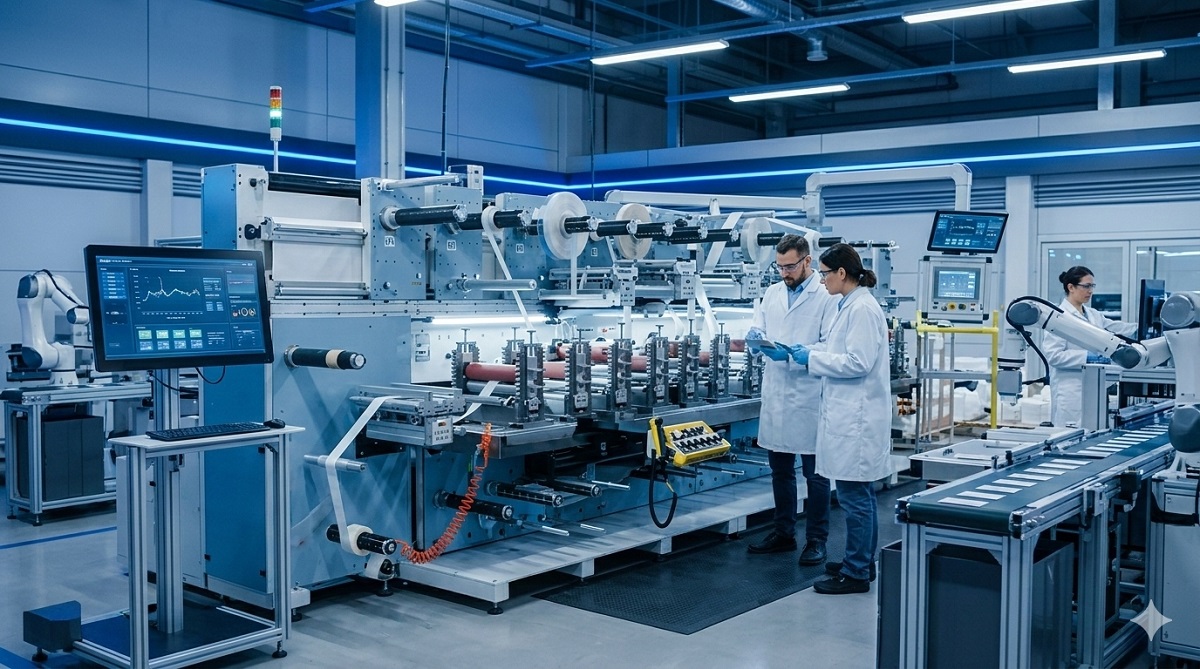
The image above is for a machine with a couple of smart cameras and over 7 motors. The machine was programmed using VB + Galil programming language which made the throughput much higher than a similar machine programmed using PLC.
VB Programming Limitations and Workarounds
Timer Accuracy Issues in Visual Basic
One major limitation of VB was its timer accuracy (around 15 ms). This created delays in high-speed systems.
Offloading Tasks to Motion Controllers
To solve this, we moved critical operations to the motion controller, which provided:
-
Faster execution
-
Higher precision
PLC vs PC-Based Control: A Performance Comparison
Why PC-Based Systems Achieved Higher Throughput
By combining VB + Galil programming, we achieved significantly higher throughput compared to traditional PLC systems.
This was due to:
-
Parallel processing
-
Reduced delays
-
Better control logic
Case Study: SMARTRAC and RFID Manufacturing Innovation
SMARTRAC, a global leader in RFID and smart card technology, utilized advanced manufacturing systems to produce:
-
Contactless credit cards
-
ePassports
Through collaboration with Xytec Malaysia, they gained access to specialized machinery, enabling high-efficiency production.
Lessons for ICT and Automation Engineers
-
Focus on real-time performance
-
Optimize software for hardware capabilities
-
Use parallel processing whenever possible
🎥 Recommended YouTube Videos
-
https://www.youtube.com/watch?v=Z3x8n2l9p0Y
-
https://www.youtube.com/watch?v=YpLw8s9k3Q0
-
https://www.youtube.com/watch?v=K8f7m2pQ1xA
📚 Case Studies
Case Study 1: RFID Production Optimization
Companies using parallel automation systems improved throughput by over 30% by reducing idle time.
Case Study 2: PLC vs PC-Based Automation
Studies show PC-based systems outperform PLCs in high-speed, multi-axis applications.
Case Study 3: Smart Manufacturing Systems
Modern factories use distributed control systems to maximize efficiency.
💬 Related Reddit Discussions
-
https://www.reddit.com/r/PLC/comments/automation_vs_pc_control/
-
https://www.reddit.com/r/engineering/comments/motion_control_systems/
-
https://www.reddit.com/r/embedded/comments/industrial_pc_vs_plc/
Conclusion
Improving machine throughput is not just about faster hardware—it’s about smarter software and better system design. By leveraging PC-based automation, parallel processing, and motion controllers, it is possible to outperform traditional systems and achieve significant efficiency gains.
FAQs
1. What is throughput?
It’s the number of units produced over time.
2. What improves throughput?
Reducing idle time and optimizing processes.
3. Is PC automation better than PLC?
For complex systems, yes.
4. What is a motion controller?
A device that controls motor movements.
5. Why is parallel processing important?
It reduces delays and increases efficiency.
.png)
.png)