
Why AP Computer Science A Students Struggle with Java (And How to Fix It Fast)
What Most AP CSA Students Get Wrong in Java
If you’re preparing for AP Computer Science A (APCSA), you’ve probably faced this situation:
👉 You understand the lesson… but your code doesn’t behave as expected.
This is one of the most common issues students face, especially in topics like:
- Method overloading
- Passing variables
- Value vs reference semantics
And it’s exactly what came up in a recent tutoring session.
📺 Watch the Real AP Computer Science A Tutoring Session
This article is based on a real one-to-one AP Computer Science A tutoring session covering method overloading, pass-by-value, reference semantics, Java memory, and return statements.
🎥 Session Recording: (YouTube )
📄 Class Slides (PDF): (Google Drive)
Method Overloading Confusion
One of the first challenges students face is method overloading.
Java allows:
- Same method name
- Different parameters (type, number, or order)
Sounds simple—but here’s the problem:
👉 Students don’t understand how Java decides which method to call.
In the session, this confusion appeared when different parameter types triggered unexpected method behavior.
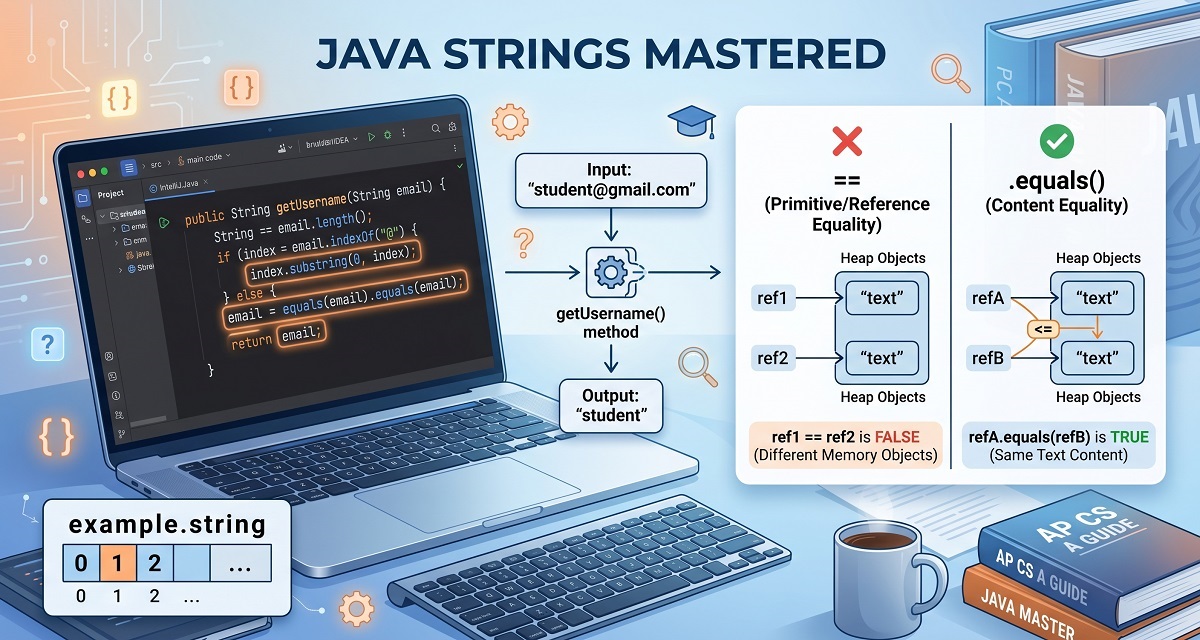
Value vs Reference Semantics
This is where most students get stuck.
👉 “Why didn’t my variable change?”
Because in Java:
- Primitive types → passed by value (copy)
- Objects → reference is copied
This subtle difference causes major confusion in exams.
Real Example from a Tutoring Session (What Actually Happens)
During the session, we worked through a simple example:
👉 Multiply a variable inside a method
Student expectation:
- Value changes everywhere
Actual result:
- Value stays the same
Student Mistakes in Passing Variables
The key misunderstanding:
👉 Students think they are modifying the original variable
But in reality:
- A copy is created in method memory
- The original stays unchanged
Why Code Works Differently Than Expected
This is because Java separates:
- Main memory (original variable)
- Method memory (copy of variable)
Unless you:
👉 Return the value and reassign it
Nothing changes.
Understanding Java Memory (The Key to Higher Scores)
Primitive Types vs Objects
Primitive example:
int x = 5;
👉 Passed as a copy
Object example:
Hotel h1 = new Hotel();
👉 Reference is copied (points to same object)
Method Memory vs Main Memory
This is one of the most important concepts for APCSA:
- Methods create new memory space
- Changes inside do NOT affect original values
Unless:
👉 You explicitly return and store the result
Why Students Lose Marks in AP CSA Exams
Not Understanding Return Values
Students often write:
void multiply(int x)
Then try to use it in:
System.out.println(multiply(x));
👉 This causes errors
Confusion Between Void and Non-Void Methods
Key rule:
- Void method → no return value
- Non-void method → must return value
This is heavily tested in AP exams.
Step-by-Step Strategy to Master These Concepts
From real tutoring experience:
- Practice small code examples
- Focus on memory behavior
- Always trace variables step-by-step
- Use return values correctly
- Debug intentionally (not randomly)
Insights from Reddit (Real Student Problems)
Students frequently say:
👉 “I don’t understand why my variable didn’t change”
👉 “Java references confuse me”
👉 “Methods don’t behave how I expect”
🔗 Sources:
https://www.reddit.com/r/APStudents/
https://www.reddit.com/r/learnprogramming/
https://www.reddit.com/r/csMajors/
🎥 Recommended YouTube Videos
- https://www.youtube.com/watch?v=GoXwIVyNvX0
- https://www.youtube.com/watch?v=TBWX97e1E9g
- https://www.youtube.com/watch?v=Yh8cHUB-KoU
Case Studies
Research shows:
- Students struggle with abstraction in Java
- Memory models improve understanding
- Guided debugging increases success rates
Conclusion
If you’re preparing for AP Computer Science A, mastering these concepts is not optional.
👉 It’s the difference between passing… and scoring a 4 or 5.
FAQs
1. Why doesn’t my variable change in Java?
Because primitives are passed by value.
2. What is method overloading?
Same method name, different parameters.
3. Why use return statements?
To save changes to main memory.
4. What is reference semantics?
Objects share memory references.
5. How to improve fast?
Practice + debugging.
Author Bio
Ahmed Elmalla is a Computer Science educator, Certified Cambridge International AS & A Level Computer Science (9618) teacher, and software engineer with over 20 years of teaching, software engineering, and international tutoring experience. He specializes in AP Computer Science A (Java) and Cambridge IGCSE (0478) and AS & A Level Computer Science (9618), helping students build strong programming, computational thinking, and exam-solving skills. Through his Learn with Kemo platform, he has mentored students from around the world using practical, exam-focused instruction tailored to each learner's needs. His lessons combine real-world software engineering experience with personalized one-to-one tutoring, making complex Java and Computer Science concepts easier to understand. Ahmed is passionate about helping students gain confidence, improve academic performance, and achieve outstanding results in international Computer Science examinations.
LinkedIn: https://www.linkedin.com/in/akelmalla
WhatsApp: https://wa.me/60194028484


.png)
.png)