Cambridge A Level Computer Science Certification
- H1: Cambridge A Level Computer Science Certification: What It Means for Your Child’s Success (9618 Syllabus Guide)
- H2: What This Cambridge Certification Is and Why It Matters
- H3: Understanding the 9618 AS & A Level Computer Science Syllabus
- H3: Why Cambridge Training Matters for Teachers
- H2: What I Learned from the Cambridge Training Course
- H3: Teaching Beyond the Textbook
- H3: Aligning Teaching with Examiner Expectations
- H2: Why Students Struggle with A Level Computer Science
- H3: Java OOP, Recursion, and Problem Solving Challenges
- H3: The Gap Between Understanding and Exam Performance
- H2: How This Certification Improves My Teaching Approach
- H3: Structured Learning for Complex Topics
- H3: Supporting Students with Different Skill Levels
- H2: What This Means for Parents (US / Europe Focus)
- H3: Better Exam Results (IGCSE, A-Level, AP CSA)
- H3: Real Programming Skills for Future Careers
- H2: Real Classroom Strategies I Now Use
- H2: Insights from Reddit: Why Students Fail CS Exams
- H2: Case Studies: Effective Computer Science Teaching
- H2: Conclusion
- H2: FAQs
- H2: What This Cambridge Certification Is and Why It Matters
Cambridge A Level Computer Science Certification: What It Really Means for Your Child’s Success (9618 Guide)
What This Cambridge Certification Is and Why It Matters
When parents look for a Computer Science tutor, they often focus on qualifications.
But here’s the truth most people miss:
👉 Not all certifications actually change how a teacher teaches.
This one does.
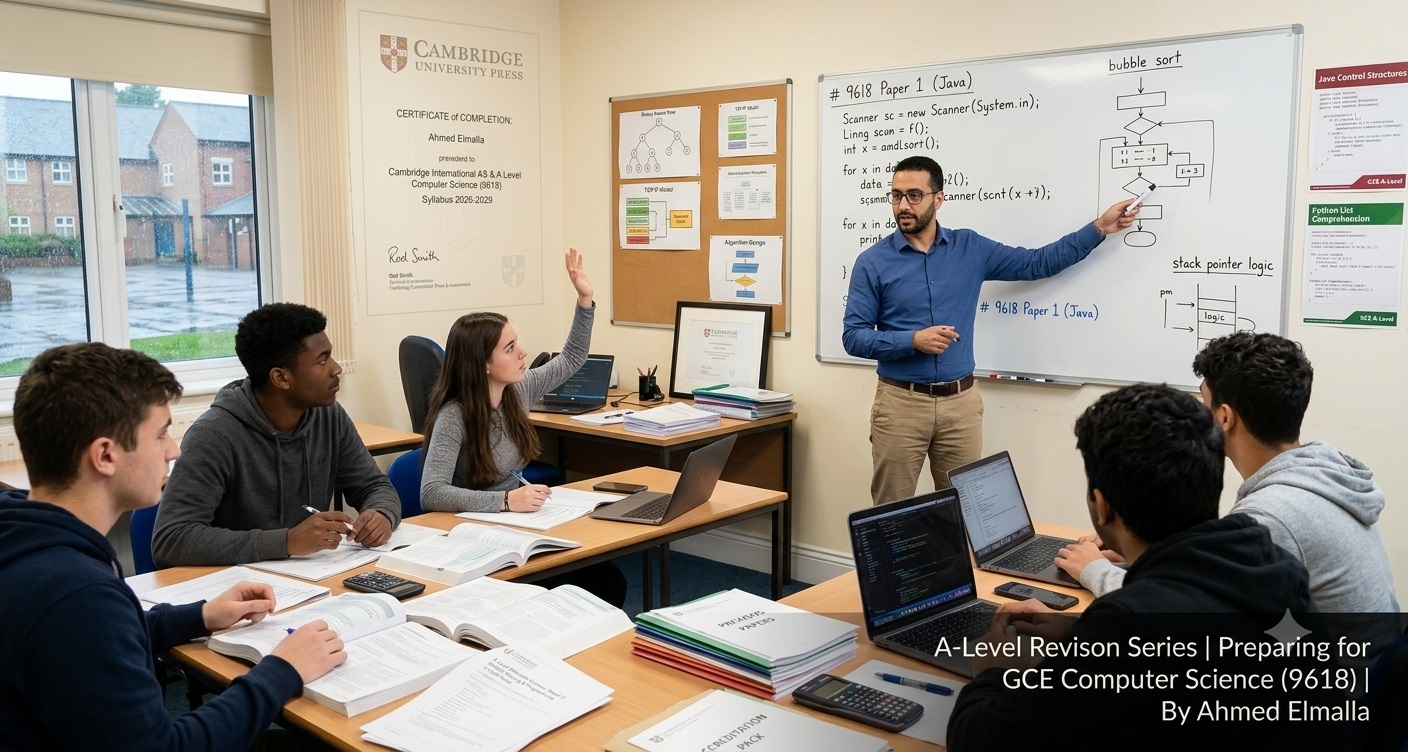
After completing the Cambridge International AS & A Level Computer Science (9618) training, I didn’t just gain a certificate—I gained direct insight into how Cambridge examiners think, mark, and assess students.
And that changes everything in the classroom.
What I Learned from Cambridge Training (That Most Teachers Don’t Know)
Marking Is Not About “Good Answers”—It’s About Evidence
One of the biggest shifts during the course was understanding how strict Cambridge marking actually is.
Teachers often assume:
👉 “If the student understands, they should get marks”
But Cambridge works differently:
- Marks are awarded only when specific criteria are met
- General understanding is not enough
- Exact meaning matters—even wording can affect marks
This explains why many students:
👉 Understand… but still lose marks.
Why Students Lose Marks (Even When They Know the Answer)
From the training discussions, a clear pattern appeared:
Students lose marks because of:
- Misunderstanding command words
- Giving incomplete explanations
- Not matching mark scheme expectations
In fact, teachers agreed that:
👉 Many errors are not knowledge gaps—but exam technique failures
The Real Problem: Students Understand but Can’t Perform
The “Practice vs Exam” Gap
Across the course, teachers consistently observed:
👉 Students perform well in class… but fail in exams
Why?
Because:
- They rely on guidance
- They don’t practice independently
- They haven’t internalized exam thinking
Why Introducing Full Papers Too Early Fails
Another key insight:
❌ Giving full exam papers too early causes:
- Stress
- Confusion
- Low confidence
Students become overwhelmed if they haven’t:
- Built foundational knowledge
- Practiced step-by-step questions
How My Teaching Approach Has Changed
1. I Now Use Diagnostic Assessments Before Every Topic
Instead of starting with teaching, I now start with:
👉 Finding what students already know
Because:
- Students come with different backgrounds
- Some lack prerequisite knowledge
- Misconceptions must be identified early
This approach is strongly recommended in the training:
👉 Diagnostic assessments help identify gaps and guide teaching
2. I Teach Exam Thinking From Day One
Instead of waiting for revision:
👉 I introduce exam questions early
But with structure:
- Start with simple questions
- Add scaffolding
- Gradually increase difficulty
Because:
👉 The most effective approach is to use past papers throughout the course, not just at the end
3. I Focus on Error Analysis (This Is a Game-Changer)
One of the most powerful strategies from the course:
👉 Teach students to analyze their mistakes
Students now learn:
- Why they lost marks
- What misconception caused the error
- How to fix it
This builds:
- Deeper understanding
- Stronger exam performance
4. I Integrate Programming With Theory (Not Separate Them)
Before:
👉 Theory and coding were taught separately
Now:
👉 They are integrated in every lesson
Because the training strongly emphasized:
👉 Theory and programming should be taught together for better understanding
5. I Use Scaffolding Before Independent Work
A major mistake many teachers make:
👉 Jumping directly into exam questions
This leads to:
- Confusion
- Weak performance
Now I use:
- Worked examples
- Guided practice
- Step-by-step tasks
Because:
👉 Lack of scaffolding makes learning difficult for average students
Why Students Struggle with Java, OOP, and Recursion
Let’s address what parents actually see:
👉 “My child finds Java very difficult”
And that’s true.
The hardest topics include:
- Object-Oriented Programming (OOP)
- Recursion
- Reference semantics
These are difficult because they require:
- Logical thinking
- Abstract understanding
- Strong foundations
What This Means for Parents (US / Europe Market)
Better Exam Results
With this new approach, students:
- Lose fewer marks
- Understand exam expectations
- Answer correctly
Stronger Real-World Skills
Students don’t just memorize.
They learn:
- Problem-solving
- Debugging
- Independent thinking
Real Classroom Strategies I Now Use
From the Cambridge course, I now apply:
- Topic-based past paper questions
- Peer assessment
- Self-marking
- Retrieval practice
- Mini quizzes
- Programming challenges
Insights from Reddit: Why Students Still Struggle
From real student discussions:
👉 “I understand in class but fail exams”
👉 “Java OOP is confusing”
👉 “I don’t know how to answer questions properly”
🔗 Sources:
https://www.reddit.com/r/learnprogramming/
https://www.reddit.com/r/6thForm/
https://www.reddit.com/r/csMajors/
Case Studies: What Actually Works in CS Teaching
From both research and Cambridge training:
- Active learning improves retention
- Scaffolding improves understanding
- Early exam practice improves results
🎥 Recommended YouTube Videos
- https://www.youtube.com/watch?v=rfscVS0vtbw
- https://www.youtube.com/watch?v=8mAITcNt710
- https://www.youtube.com/watch?v=E6FjR3p5a6U
Conclusion
This certification is not just a credential.
👉 It represents a fundamental shift in how Computer Science should be taught
And that directly impacts:
- Student confidence
- Exam performance
- Future success
FAQs
1. What is Cambridge 9618?
A-level computer science syllabus.
2. Why is it important?
Prepares students for exams and careers.
3. Why do students struggle?
Complex concepts like OOP.
4. How does this help?
Better teaching strategies.
5. Who benefits?
Students and parents.
Author Bio
Ahmed Elmalla is an ICT and Computer Science educator with over 19 years of experience in software engineering and international teaching. He teaches Cambridge IGCSE, A-Level, and AP Computer Science, helping students build strong foundations in programming, computational thinking, and digital skills.
Ahmed specializes in Python, Java, and beginner-friendly coding for younger learners, making complex technology concepts simple and engaging. He has mentored students from more than 10 countries and brings real industry experience from AI, software engineering, and startup development into his teaching.
Connect with Ahmed
LinkedIn
https://www.linkedin.com/in/akelmalla
WhatsApp
https://wa.me/60194028484


.png)
.png)